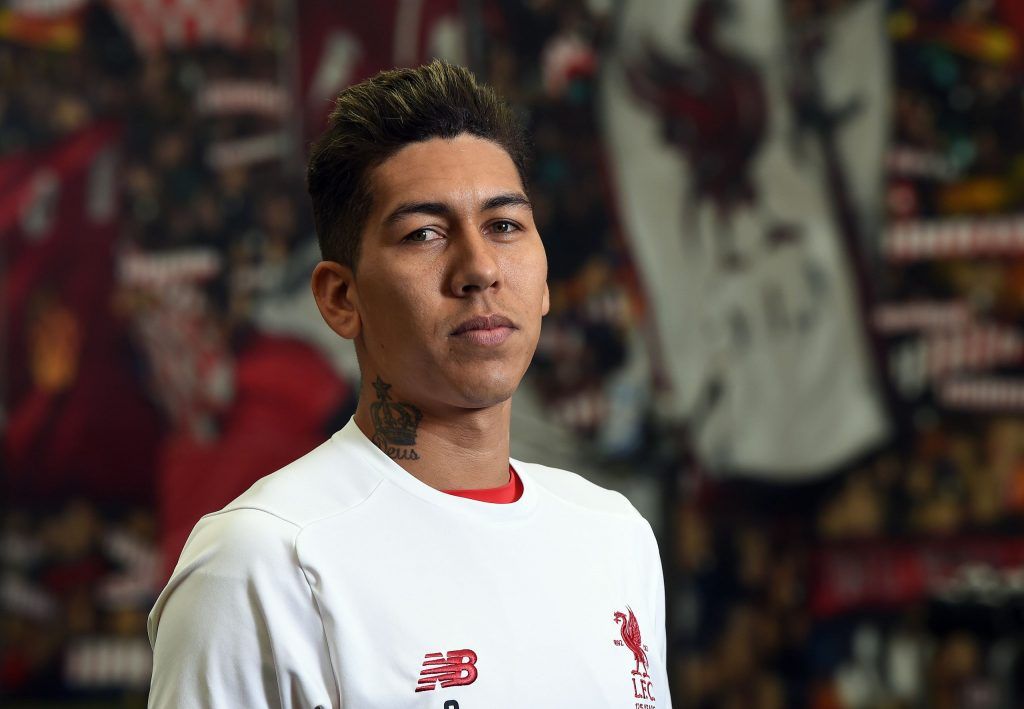
Such noise was simple to skip for those in recruitment - from the scouts, to the research team headed by the esteemed Ian Graham, through to the decision makers, who had scanned Firmino’s progress since his teenage years. There was collective confidence that it was a small investment for a player who had the potential to sizeably shape Liverpool’s attacking future.
The folder on the club’s “important player, connecting player, finisher, fighter and first defender" - to borrow Jurgen Klopp’s description - was created when he was still submerged under Brazil’s flooded supply line of footballers.
Fernando Troiani, Liverpool’s head of South American scouting, had sketched a profile on Firmino, who was first registered to Clube de Regatas Brasil before a failed trial at Sao Paulo led him to Figueirense aged 17. He was pinned as a skinny and skilful kid, who required plenty of development, but had endless promise.
That he could combine the illuminating football for which his country is famed alongside the more aggressive Uruguayan and Argentine influence picked up from his second club was of particular interest. Troiani, who works with Gonzalo Siegrist to canvas the region, had the inside track on Firmino - as is often the case - despite competition in the area from 27 other scouts who serve the Manchester clubs - 14 for City, with 13 representing United.
At that stage, the raw teen - guided by dentist Marcellus Portella - wasn’t a target for Liverpool, but a platform had been established for further analysis. That followed when Hoffenheim catapulted Firmino from Brazil's second division to the Bundesliga shortly after his 19th birthday. Troiani’s notes were passed to the Reds’ German scout, Andy Sayer, as well as his Dutch counterpart Steven Aptroot, now at Feyenoord, who was keen on mapping the adaptation of South American players in Europe.
The latter watched Firmino in 2011 and 2012, scoring him highly, before Sayer prepared a more intense inspection early in the 2013-14 season. Initially, Liverpool’s admiration of the son of a street hawker was obstructed by the old UK work permit rules, which stipulated players needed to have featured in at least 75% of their country’s senior international matches over the previous two years.