

Share
1st November 2017
01:24pm GMT

"If you look at an international week, for example, and work backwards - you have a match on a Saturday, team run on Friday, session on a Thursday, down day on Wednesday and either a Tuesday or a Monday session as you're still recovering from the week before. So these guys only have the guts of two sessions to prepare for a Test match."
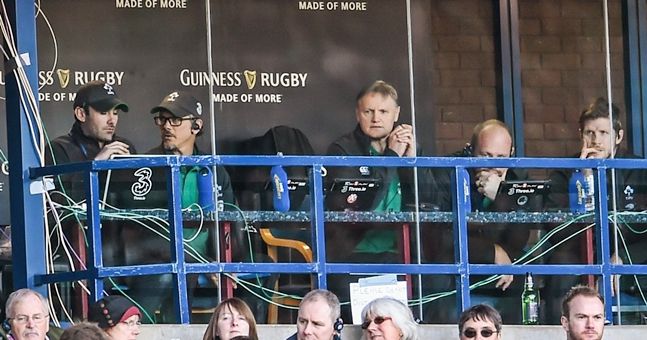 Get to match day and Hammond is often sitting within touching distance of Schmidt in the coaches' box. There will be a laptop, or two, open and he will be logging information. Sometimes confirming the opposition are playing the way they expected, other times trying to figure out what they are doing differently.
"Very often we're just answering questions," he says, "like, 'Okay, can we go back and check out the set up of the last scrum' or 'Go back and look at the walk in to the last lineout'. It's the tiny, tiny margins you're trying to figure out and find, mid-game."
There is no bigger example of these fine margins, to Hammond, than Jamie Heaslip's 75th minute, last-ditch tackle against Scotland that ended up being crucial in Ireland winning the Six Nations. Had Heaslip given up on making that tackle - with Ireland already 40-10 ahead - his team would have been eventually pipped to the title on points difference when England beat France later that night.
https://youtu.be/mHdXgb0dKL4
As soon as each Ireland game finishes, Hammond and fellow analysts Jeff Blackburn and Mervyn Murphy will set to coding - taking a proper look back at the game, from the point of view of the team and individual players. Each player will get a video highlights package of their own contributions to the game.
A key element with feedback, says Hammond, is consistency. He comments:
Get to match day and Hammond is often sitting within touching distance of Schmidt in the coaches' box. There will be a laptop, or two, open and he will be logging information. Sometimes confirming the opposition are playing the way they expected, other times trying to figure out what they are doing differently.
"Very often we're just answering questions," he says, "like, 'Okay, can we go back and check out the set up of the last scrum' or 'Go back and look at the walk in to the last lineout'. It's the tiny, tiny margins you're trying to figure out and find, mid-game."
There is no bigger example of these fine margins, to Hammond, than Jamie Heaslip's 75th minute, last-ditch tackle against Scotland that ended up being crucial in Ireland winning the Six Nations. Had Heaslip given up on making that tackle - with Ireland already 40-10 ahead - his team would have been eventually pipped to the title on points difference when England beat France later that night.
https://youtu.be/mHdXgb0dKL4
As soon as each Ireland game finishes, Hammond and fellow analysts Jeff Blackburn and Mervyn Murphy will set to coding - taking a proper look back at the game, from the point of view of the team and individual players. Each player will get a video highlights package of their own contributions to the game.
A key element with feedback, says Hammond, is consistency. He comments:
"You can't go judging them on one set of criteria one week and then, the next week, say, 'You did this, this and this' but you're judging them off something else. "If you're a player, all you want is to be judged on the same yard-stick as you were the week before and as everybody else."
"If the way you [the analyst] are classifying things is not a direct reflection of the way the coaches are talking about things in reviews and previews, then we have a big problem."McLaughlin recalls being distraught after some matches when he felt he had not played at his best, and he was quickly logging on to see what his match statistics were. He added:
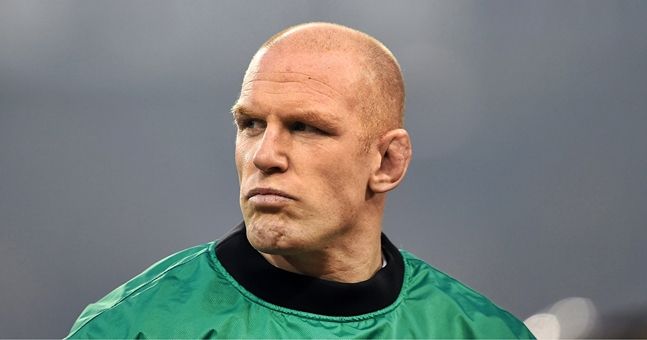
"Lads can get pretty obsessed and upset if they feel they've been hard done by... They'd be sitting and looking at their stats, and going, 'Vinny, that's f**king bullshit. That's not a soak!'. "I remember in Leinster it used to happen all the time. There were certain times that guys would pull our analyst [Emmett Farrell] to one side, sit him down and go through every single stat, every single week and question every single one.""It's always the same guys," Hammond remarks. "They'll look over and go, 'What's this?!' and when you tell them it's a soak tackle, they will pull up someone else's clips and say, 'How come he didn't get a soak tackle?!' That's the worst one. That means they've gone to the bother of looking at all the other soak tackles." One player that let nothing slip, when it came to giving feedback to his feedback, was Paul O'Connell. "Paul was a nightmare," says Hammond, "but in a great way. Lovely guy, lovely guy!"
 McLaughlin and Hammond are in full agreement on an area that both O'Connell and Heaslip excelled at - big moments in games.
"Most top level coaches are good at that," says Hammond. "They see the difference between a statistic and a performance. That's really important. There are so many variables involved in any given game that to give a guy a cold number is counter-intuitive... Players just want to know can they perform in the really big moments in the game. That's far superior than to maybe dropping two passes along the way."
McLaughlin and Hammond are in full agreement on an area that both O'Connell and Heaslip excelled at - big moments in games.
"Most top level coaches are good at that," says Hammond. "They see the difference between a statistic and a performance. That's really important. There are so many variables involved in any given game that to give a guy a cold number is counter-intuitive... Players just want to know can they perform in the really big moments in the game. That's far superior than to maybe dropping two passes along the way."Explore more on these topics:


