

Share
4th July 2022
03:59pm BST

"If you do that in New Zealand, you normally end up underneath your posts. Against other teams you don’t, you concede territory but that’s the difference between New Zealand at home and any other team; their capacity to execute at speed from turnover ball."Sure enough, Ireland gave up plenty of cheap ball through penalties, players getting isolated and turned over, and trying risky passes when they were not on. In the space of a frantic and damaging 11 minutes, just before half-time, Garry Ringrose, James Ryan, Tadhg Beirne and Jamison Gibson Park all made uncharacteristic errors. Sure enough, the ABs pounced and there were tries for Sevu Reece, Quinn Tupaea and Ardie Savea. "In that 10-minute period," O'Gara reflected, on Sky Sports, "you can't concede a triple concede. Game over." [caption id="attachment_266291" align="aligncenter" width="800"]
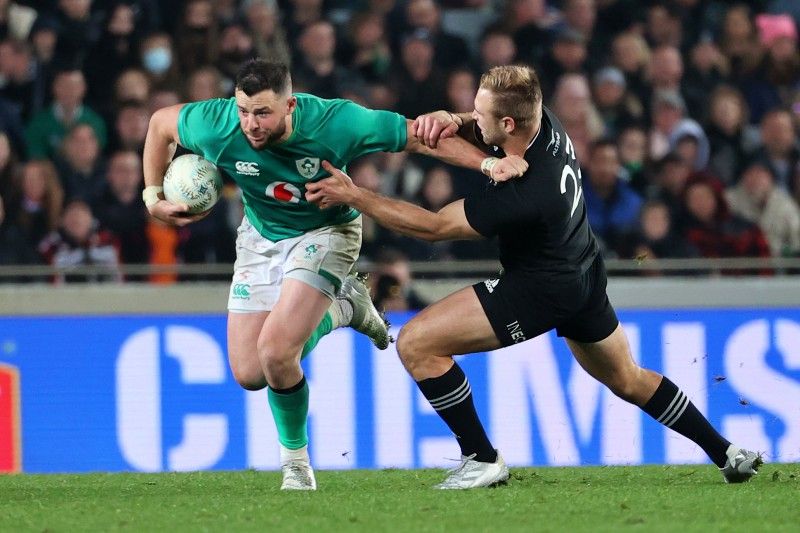 Robbie Henshaw of Ireland fends Braydon Ennor of the All Blacks, at Eden Park. (Photo by Fiona Goodall/Getty Images)[/caption]
"And Ireland will receive some good messages from that [game]. I still think, and many people will think I'm crazy, that Ireland can win a Test. You look at the scoreline when it was 7-5 and Ireland were 15 metres from the New Zealand tryline. Then [with the Sevu Reece try] it becomes a 14-point swing. Then, from the kick-off reception, New Zealand score again and then they score again. That's what happens when you're under pressure in New Zealand. "What Ireland need to understand, and understand quickly, is that you can't do that. You have to make New Zealand doubt. You have to put them in that pressure zone where it becomes a one-score game. At 28-5, that doesn't happen; it doesn't exist. It becomes mentally soft, from a New Zealand point of view. You have to make these guys doubt.""And they were under pressure," O'Gara added."I don't think that's anywhere near as good a performance as some people may think. They are going to get better. That's the other thing - from an Irish point of view - New Zealand will get a lot better. The damage by Ireland in conceding 21 points in that short period construes it away from any realistic hope of winning game." [caption id="attachment_266290" align="aligncenter" width="800"]
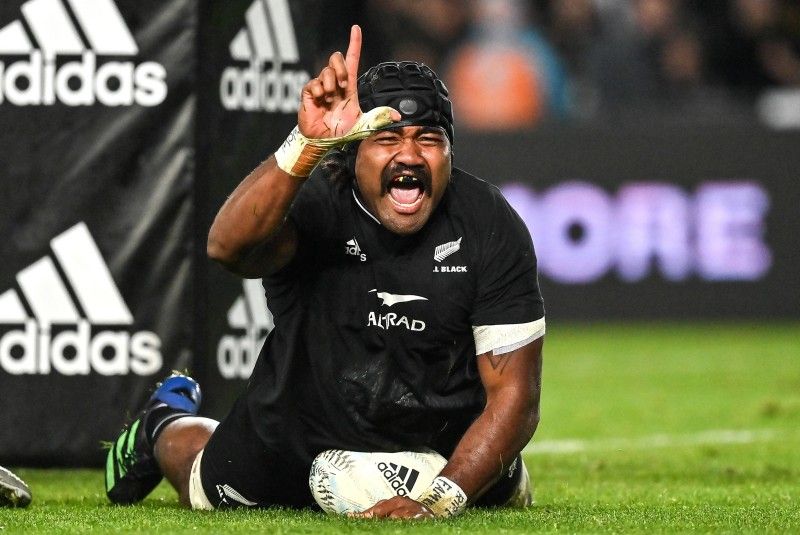 Pita Gus Sowakula of New Zealand celebrates after scoring his side's sixth try against Ireland, at Eden Park. (Photo by Brendan Moran/Sportsfile)[/caption]
"As coaches, you set up for stopping teams in the first two collisions," he said. "If you don't win the first two collisions, in Test rugby, you're going to be on the back-foot all day. But if you can actually stop the flow of the New Zealand team, in those two collisions, they can only, then, kick it because they are running into a brick wall. "You look at New Zealand's first try and it was probably the first time they had a sequence of attack that looked planned, or organised. I know they are exceptional ball-players and they play in the moment, and on instinct."O'Gara was part of an Ireland team that came so close to a famous win over the All Blacks, in Christchurch, either side of two heavy defeats, back in 2012. "It sounds ludicrous with a 23-point difference, at the end," he said, "but in the modern game, it can change so quickly. You can't beat yourself up either." On how Ireland bounce back, Ronan O'Gara declared:
"One of the great characteristics is we're used to adversity. These boys have seen that. You've got to be cohesive. Nothing wrong with a good sing-song, or understanding how privileged they are. They still have an opportunity. "There will be lots of people giving out about them. That comes at the highest level. They will understand that there aren't a lot of things to change, but the key learning is about respecting the ball. The ball is king against New Zealand teams. They made over 200 tackles but if you are inaccurate at a certain stage, that is where you pay. Eden Park remains such a fortress."Andy Farrell will name his Ireland XV for that Second Test early on Thursday morning [Irish time].
Explore more on these topics:


