

Share
10th February 2017
07:00pm GMT

 Looking at how we can expect things to run out, of concern to Vincent’s should be that GaaProstats Zonal Kick-out Analysis showed that from 12 slow kick-outs that Rhode played to their full back line (more than 9.5 seconds after the ball went dead), they managed to score six points!
That Slaughtneil scored three from ten such slow kick-outs to the full back line in the Ulster Final, without conceding anything upon a first turnover, makes a combined pattern that potentially spells trouble for Vincent’s.
Vincents’ GaaProstats Score Concession Analysis shows them closer to the 40% mark in terms of “Grade 3 Concessions”. That is to say, they’re more inclined than Slaughtneil to allow oppositions to “pick and poke” their way to kicking points without having to take on a defender directly. GaaProstats Zonal Defence Analysis illustrates that they had an alarmingly high 40% score concession against Rhode when they had a blanket defence in place, or 46% including when they had only one spare defender. And Rhode had a penalty saved.
If Slaughtneil are to win, patterns suggest this element will be key, “picking and poking” their way through Vincent’s blanket defence.
It is, however, the aforementioned kick-outs wherein lies one of the two keys to the game.
Looking at how we can expect things to run out, of concern to Vincent’s should be that GaaProstats Zonal Kick-out Analysis showed that from 12 slow kick-outs that Rhode played to their full back line (more than 9.5 seconds after the ball went dead), they managed to score six points!
That Slaughtneil scored three from ten such slow kick-outs to the full back line in the Ulster Final, without conceding anything upon a first turnover, makes a combined pattern that potentially spells trouble for Vincent’s.
Vincents’ GaaProstats Score Concession Analysis shows them closer to the 40% mark in terms of “Grade 3 Concessions”. That is to say, they’re more inclined than Slaughtneil to allow oppositions to “pick and poke” their way to kicking points without having to take on a defender directly. GaaProstats Zonal Defence Analysis illustrates that they had an alarmingly high 40% score concession against Rhode when they had a blanket defence in place, or 46% including when they had only one spare defender. And Rhode had a penalty saved.
If Slaughtneil are to win, patterns suggest this element will be key, “picking and poking” their way through Vincent’s blanket defence.
It is, however, the aforementioned kick-outs wherein lies one of the two keys to the game.
 Based on all previous evidence, you have to assume that both sides are going to push up on the kick-outs, attempting to deprive the opposition the short, quick ones.
Vincent’s play an old school three-man full forward line of Mossy Quinn, Enda Varley and Ruairí Trainor, so are generally well set up to go man on man.
Slaughtneil’s Christopher Bradley at number 13 tends to play somewhat as a rover, but he or somebody else normally picks up the opposition corner back quickly on the kick-out.
What is noteworthy is the lengths both sides have gone to with set pieces in order to win their own kick-outs. Vincent’s Dublin semi-final with Ballymun was a methodical war in its own right in this regard.
What is particularly noteworthy about Slaughtneil is just how many times they’ve successfully managed to play slow kick-outs to their full back line, particularly against Kilcoo, despite the fact that the opposition had gone man on man on the kick-outs.
They managed a massive 10 of these against Kilcoo which was undoubtedly decisive, with three ending up as points, and none as scores conceded upon the first turnover.
Well-worked and earned as these kicks were, with defenders cleverly peeling off their men, Vincent’s Quinn, Varley and Trainor are three of the wiliest foxes in the game. It seems unfathomable that they’ll allow this to happen. And if they don’t, the winning and losing of the game will be the long kick-out, and maybe the quick, short one, which is why I marginally favour Vincent’s.
As yet, there’s no evidence to suggest that Slaughneil will allow an opposition to get quick kick-outs off, but if Vincent’s do manage it, you can expect carnage. They ravaged Castleknock in this regard in the Dublin final scoring three points from four quick kicks, a patterns only slightly higher than their general average.
And from four attacks in the Ulster final where Slaughtneil were forced to defend man-on-man, GaaProstast Zonal Defence Analysis shows they coughed up a point on each.
That’s not to mention that when exposed man on man in the Ulster semi and final, GaaProstats Breach/Interception Analysis showed that five of Slaughtneil’s middle eight, were consistently beaten when taken on one on one.
If Vincent’s get the kick-outs off quickly, or turn over possession and attack at pace, there’s no evidence to suggest that Slaughtneil have an abundance of individuals in the middle third who will stop the likes of Shane Carthy, Diarmuid Connolly, Gavin Burke or Cameron Diamond, or maybe Mick Concarr, from getting by them, especially down the flanks.
Yes, Slaughtneil will have to get possession on their own kick-outs and dictate the pace with their methodical football, just as they have done in Ulster. Of course they can do it. They beat a Kilcoo side, as athletic as you’ll find in club football.
But with both sides likely to try to prevent the opposition from getting off short kick-outs kicks, the long kick-out will be key.
Yes, Vincent’s have some previously mentioned issue that when they’ve lost the opposition’s long kick-outs. GaaProstats Zonal kick-out Analysis illustrates they’ve shipped points and “one on one” goal chances heavily.
And in this finely balanced game, it’s not beyond reason that it could be their undoing.
Based on all previous evidence, you have to assume that both sides are going to push up on the kick-outs, attempting to deprive the opposition the short, quick ones.
Vincent’s play an old school three-man full forward line of Mossy Quinn, Enda Varley and Ruairí Trainor, so are generally well set up to go man on man.
Slaughtneil’s Christopher Bradley at number 13 tends to play somewhat as a rover, but he or somebody else normally picks up the opposition corner back quickly on the kick-out.
What is noteworthy is the lengths both sides have gone to with set pieces in order to win their own kick-outs. Vincent’s Dublin semi-final with Ballymun was a methodical war in its own right in this regard.
What is particularly noteworthy about Slaughtneil is just how many times they’ve successfully managed to play slow kick-outs to their full back line, particularly against Kilcoo, despite the fact that the opposition had gone man on man on the kick-outs.
They managed a massive 10 of these against Kilcoo which was undoubtedly decisive, with three ending up as points, and none as scores conceded upon the first turnover.
Well-worked and earned as these kicks were, with defenders cleverly peeling off their men, Vincent’s Quinn, Varley and Trainor are three of the wiliest foxes in the game. It seems unfathomable that they’ll allow this to happen. And if they don’t, the winning and losing of the game will be the long kick-out, and maybe the quick, short one, which is why I marginally favour Vincent’s.
As yet, there’s no evidence to suggest that Slaughneil will allow an opposition to get quick kick-outs off, but if Vincent’s do manage it, you can expect carnage. They ravaged Castleknock in this regard in the Dublin final scoring three points from four quick kicks, a patterns only slightly higher than their general average.
And from four attacks in the Ulster final where Slaughtneil were forced to defend man-on-man, GaaProstast Zonal Defence Analysis shows they coughed up a point on each.
That’s not to mention that when exposed man on man in the Ulster semi and final, GaaProstats Breach/Interception Analysis showed that five of Slaughtneil’s middle eight, were consistently beaten when taken on one on one.
If Vincent’s get the kick-outs off quickly, or turn over possession and attack at pace, there’s no evidence to suggest that Slaughtneil have an abundance of individuals in the middle third who will stop the likes of Shane Carthy, Diarmuid Connolly, Gavin Burke or Cameron Diamond, or maybe Mick Concarr, from getting by them, especially down the flanks.
Yes, Slaughtneil will have to get possession on their own kick-outs and dictate the pace with their methodical football, just as they have done in Ulster. Of course they can do it. They beat a Kilcoo side, as athletic as you’ll find in club football.
But with both sides likely to try to prevent the opposition from getting off short kick-outs kicks, the long kick-out will be key.
Yes, Vincent’s have some previously mentioned issue that when they’ve lost the opposition’s long kick-outs. GaaProstats Zonal kick-out Analysis illustrates they’ve shipped points and “one on one” goal chances heavily.
And in this finely balanced game, it’s not beyond reason that it could be their undoing.
 With this in mind, why don’t I think this will cost Vincent’s? Because they’re far more efficient under breaks than Slaughtneil.
In fact, more specifically, they’re far more efficient on breaks in their attack compared to Slaughtneil’s defence.
The chances of either Slaughtneil’s Patsy Bradley or Vincent’s Daithí Murphy dominating the other on kick-outs, are slim. So we can expect a lot of breaks.
In terms of Vincent’s kick-outs which will likely be broken between Vincent’s defence and Slaughtneil’s forwards, it’s a case of an unstoppable force meeting an immovable object. Both are ferociously efficient, each typically getting first up to the break winning space.
With this in mind, why don’t I think this will cost Vincent’s? Because they’re far more efficient under breaks than Slaughtneil.
In fact, more specifically, they’re far more efficient on breaks in their attack compared to Slaughtneil’s defence.
The chances of either Slaughtneil’s Patsy Bradley or Vincent’s Daithí Murphy dominating the other on kick-outs, are slim. So we can expect a lot of breaks.
In terms of Vincent’s kick-outs which will likely be broken between Vincent’s defence and Slaughtneil’s forwards, it’s a case of an unstoppable force meeting an immovable object. Both are ferociously efficient, each typically getting first up to the break winning space.
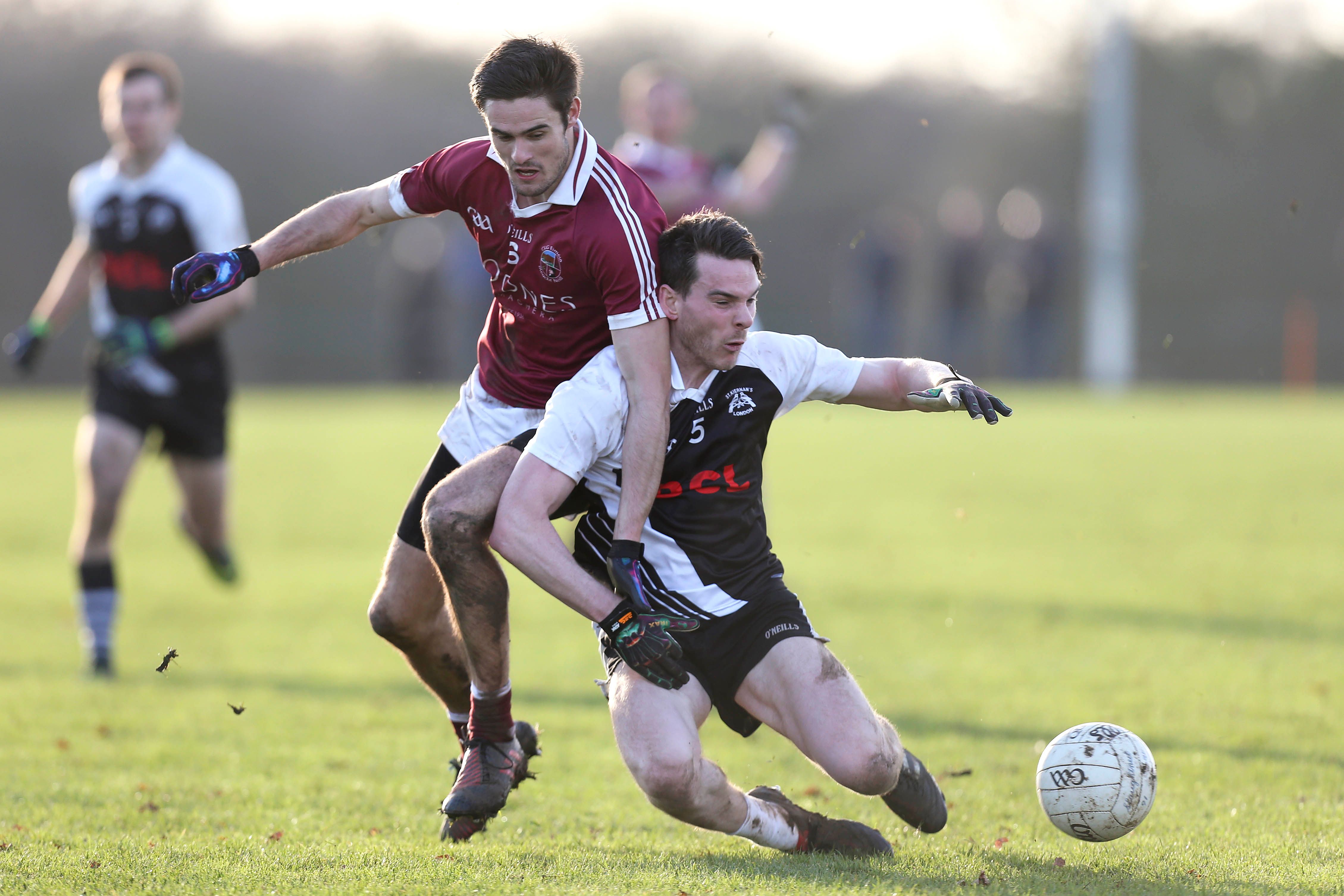 With two such evenly-balanced sides, amongst other key battles, how Chrissy McCaigue manages this threat, is almost certain to be the other key difference.
It remains to be seen, if he can be the first defender in this 2016/17 campaign to eliminate this danger!
If Vincent’s force Slaughtneil to go long on kick-outs, or get more than six or seven of their own kick-outs off quickly and breach “the Killer Quarter”, I’d fancy them.
These factors aside, if Connolly sparkles again, and is worth four points or more, I’d fancy them.
If Slaughtneil can prevent these three elements, or maybe even two, I’d fancy their methodical play and tight defence to win the day.
If they stop Connolly, or win more long kick-outs than Vincent’s, however, they’ll e the first in this 2016/17 campaign!
The stats in this article were compiled using the newly developed GaaProstats statistical and video analysis program. This program has been specifically designed for Gaelic football and hurling. It is now available for all clubs to download free for a month’s trial.
With two such evenly-balanced sides, amongst other key battles, how Chrissy McCaigue manages this threat, is almost certain to be the other key difference.
It remains to be seen, if he can be the first defender in this 2016/17 campaign to eliminate this danger!
If Vincent’s force Slaughtneil to go long on kick-outs, or get more than six or seven of their own kick-outs off quickly and breach “the Killer Quarter”, I’d fancy them.
These factors aside, if Connolly sparkles again, and is worth four points or more, I’d fancy them.
If Slaughtneil can prevent these three elements, or maybe even two, I’d fancy their methodical play and tight defence to win the day.
If they stop Connolly, or win more long kick-outs than Vincent’s, however, they’ll e the first in this 2016/17 campaign!
The stats in this article were compiled using the newly developed GaaProstats statistical and video analysis program. This program has been specifically designed for Gaelic football and hurling. It is now available for all clubs to download free for a month’s trial. Explore more on these topics:

Sports | JOE
sport


