

Share
29th May 2020
08:30am BST

Cathal Dennehy
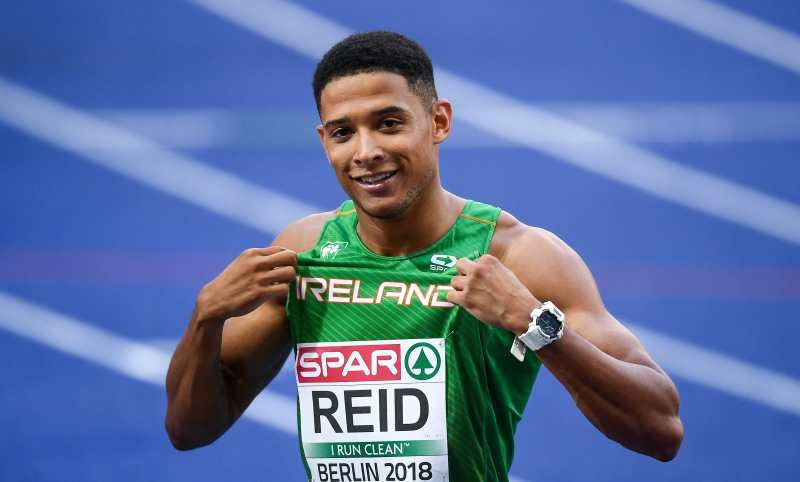 He was living in Bristol when he first found athletics, coming under the guidance of coach James Hillier at the age of 15, who has steered his career since. In his first season Reid won 100m silver at the European Youth Olympics while representing Britain, though his relationship with British Athletics soured in the years after.
“I got double-crossed,” he says. “They went back on their word a few times.”
His national identity had always been loosely defined. “My whole Mum’s side is Northern Irish and my foster Mum was born in Wexford. My Dad is English and Jamaican, so I’m actually more Irish than English.”
Reid went back and forth to Wexford throughout his teens for family events and, in 2017, he applied for a transfer of allegiance to represent Ireland. By then World Athletics (formerly the IAAF) had imposed a freeze on all transfers – aimed at stopping nations like Qatar, Bahrain and Turkey buying their way to medals – and it meant Reid had to sit out the World Championships in London.
“I didn’t watch them, apart from my friend’s races,” he says. “I didn’t want to be reminded.”
In 2018 his transfer was approved just before the European Championships in Berlin, where Reid finished seventh in the 200m final. In April that year he won 200m bronze for Northern Ireland at the Commonwealth Games in Australia, upgraded to third after England’s Zharnel Hughes was disqualified.
It was about 90 minutes after the race when he got the call with the news, which caused tears to flow for both Reid and Russell.
“When she cries, I cry,” he says. “It was everything we’d worked for, from me getting up early, eating right, not going to parties, and her making sure I had enough money to go to training camps. It was payback.”
He was living in Bristol when he first found athletics, coming under the guidance of coach James Hillier at the age of 15, who has steered his career since. In his first season Reid won 100m silver at the European Youth Olympics while representing Britain, though his relationship with British Athletics soured in the years after.
“I got double-crossed,” he says. “They went back on their word a few times.”
His national identity had always been loosely defined. “My whole Mum’s side is Northern Irish and my foster Mum was born in Wexford. My Dad is English and Jamaican, so I’m actually more Irish than English.”
Reid went back and forth to Wexford throughout his teens for family events and, in 2017, he applied for a transfer of allegiance to represent Ireland. By then World Athletics (formerly the IAAF) had imposed a freeze on all transfers – aimed at stopping nations like Qatar, Bahrain and Turkey buying their way to medals – and it meant Reid had to sit out the World Championships in London.
“I didn’t watch them, apart from my friend’s races,” he says. “I didn’t want to be reminded.”
In 2018 his transfer was approved just before the European Championships in Berlin, where Reid finished seventh in the 200m final. In April that year he won 200m bronze for Northern Ireland at the Commonwealth Games in Australia, upgraded to third after England’s Zharnel Hughes was disqualified.
It was about 90 minutes after the race when he got the call with the news, which caused tears to flow for both Reid and Russell.
“When she cries, I cry,” he says. “It was everything we’d worked for, from me getting up early, eating right, not going to parties, and her making sure I had enough money to go to training camps. It was payback.”
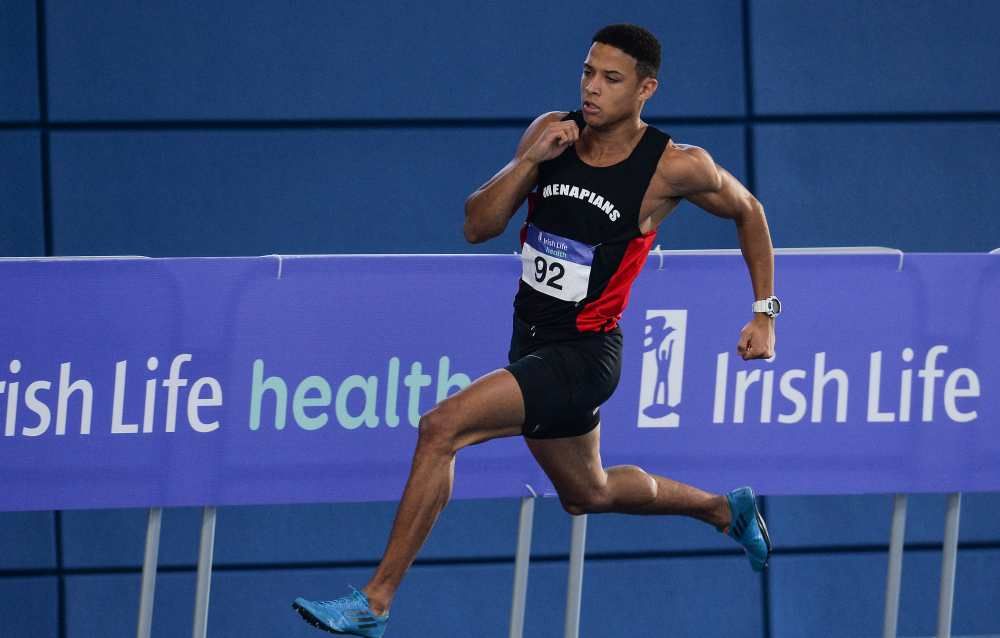 In his early 20s Reid juggled three jobs to make ends meet, coaching athletics at a school, managing a supplement shop and working behind the bar at a night club. How did he find the time? “Four or five hours sleep.”
His 200m best is 20.27, which might win a European medal or sneak him into a global final, but to make a bigger impact Reid knows he needs to get better. As such, he’s spent much time learning from the greats.
At the age of 17 he went to Jamaica to train alongside Usain Bolt. “Their work ethic was crazy, 5am starts every morning. Before the sun comes up, you’re on the grass pulling sleds.”
Years later, he became friends with Wayde van Niekerk, who smashed Michael Johnson’s 400m world record to win Olympic gold in Rio in 43.03. They first met in 2014, when Reid was vomiting after his 200m heat at the Commonwealth Games. Van Niekerk handed him a bucket: “You’ll be okay, bro.”
In his early 20s Reid juggled three jobs to make ends meet, coaching athletics at a school, managing a supplement shop and working behind the bar at a night club. How did he find the time? “Four or five hours sleep.”
His 200m best is 20.27, which might win a European medal or sneak him into a global final, but to make a bigger impact Reid knows he needs to get better. As such, he’s spent much time learning from the greats.
At the age of 17 he went to Jamaica to train alongside Usain Bolt. “Their work ethic was crazy, 5am starts every morning. Before the sun comes up, you’re on the grass pulling sleds.”
Years later, he became friends with Wayde van Niekerk, who smashed Michael Johnson’s 400m world record to win Olympic gold in Rio in 43.03. They first met in 2014, when Reid was vomiting after his 200m heat at the Commonwealth Games. Van Niekerk handed him a bucket: “You’ll be okay, bro.”
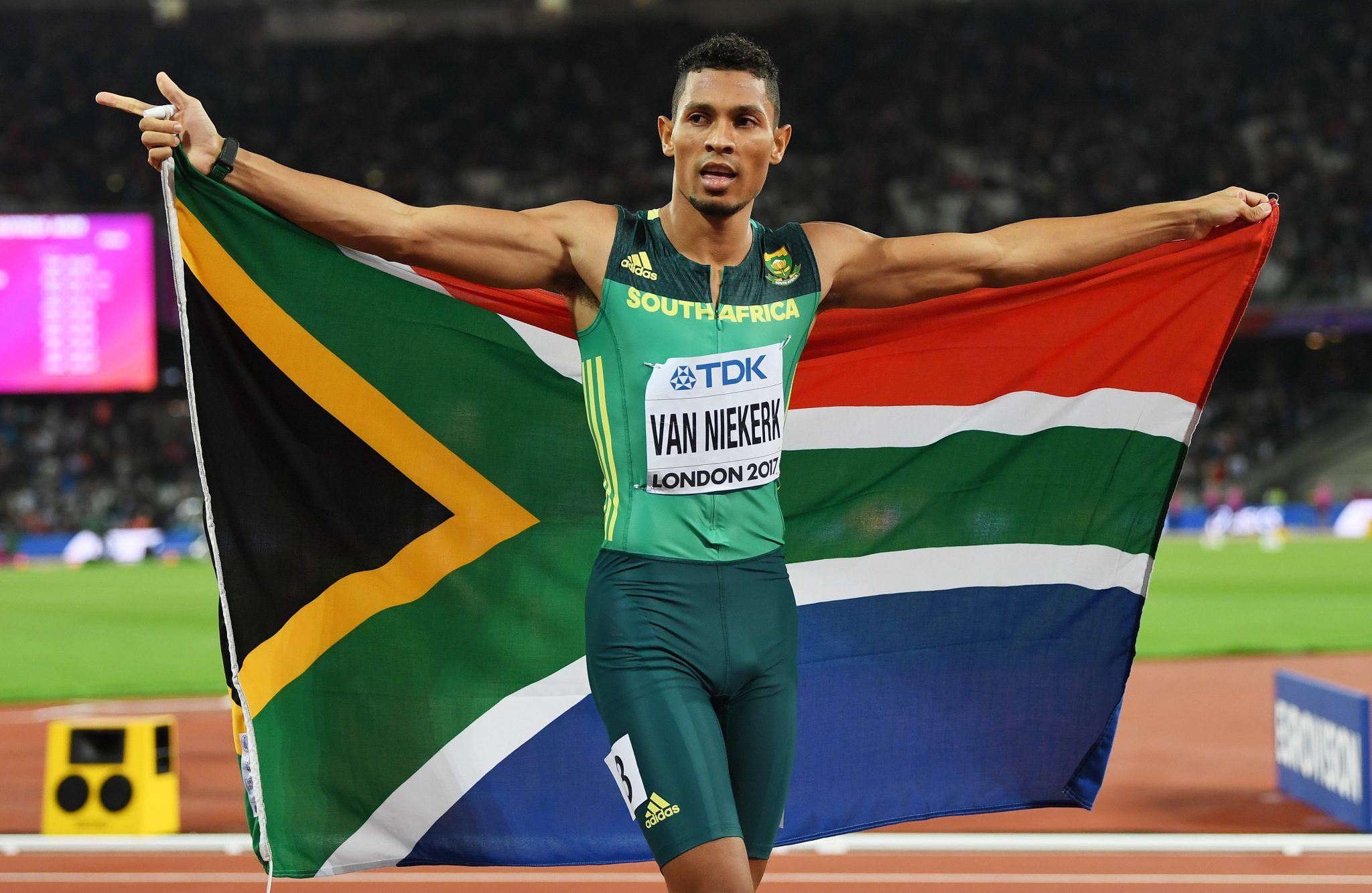 A few years later someone asked Reid on Instagram when he was coming to South Africa and he joked that he would whenever Van Niekerk invited him. The South African soon sent a message doing just that.
He first linked in with that group last year, Reid going to Italy to train under Van Niekerk’s coach, Tannie Ans Botha, the 78-year-old Namibian who is revered in the sport. She deconstructed his start – the weakest part of Reid’s race – and made a key technical change that Van Niekerk had learned while training with Bolt.
“He changed something in his start that made it electric,” says Reid. “It’s his second step.”
Injury ruled Van Niekerk out for the past two years and it was only in January that Reid finally got to train with him, Hillier giving his blessing for his protégé to travel to South Africa. “James gave the reins to Tannie and said, ‘don’t break him.’ We worked really well together.”
What did he learn about Van Niekerk?
“One, he’s superhuman. Two, he doesn’t overwork everything. There’s a fixed plan for everything and you trust the people around you.”
The third thing was his discipline. “He gets up every morning at 6am even when he doesn’t have to and he’ll do some stretching,” says Reid. “I usually stay in bed until 10am.”
The pair pushed each other to new heights on the track and got on great away from it.
“It’s a kind of friendship,” says Van Niekerk. “I thrive on the competition and I’m glad I had the opportunity to have him as a training partner. Leon is not afraid of putting in that work and it’something I enjoyed, knowing he wouldn’t make training easy. He’s a good person as well, with a good heart.”
Reid has since returned to Bath and he’s been maintaining his fitness as best he can in the age of coronavirus, lifting weights in a friend’s garage and training alone at a disused track in a nearby town.
“Athletics is lonely enough anyway, but when you train on your own that’s when it eats at you,” he says. “But when you can’t be bothered to get out of bed, you remind yourself: I’m supposed to be at the Olympics next year, which is surreal. As a kid you dream of that.”
The thing is, though, this was never his dream as a kid. Back then, all Reid really knew was the kind of life he didn’t want. Given where he’s got to, the kind of company he now keeps, perhaps his greatest success is already behind him.
A few years later someone asked Reid on Instagram when he was coming to South Africa and he joked that he would whenever Van Niekerk invited him. The South African soon sent a message doing just that.
He first linked in with that group last year, Reid going to Italy to train under Van Niekerk’s coach, Tannie Ans Botha, the 78-year-old Namibian who is revered in the sport. She deconstructed his start – the weakest part of Reid’s race – and made a key technical change that Van Niekerk had learned while training with Bolt.
“He changed something in his start that made it electric,” says Reid. “It’s his second step.”
Injury ruled Van Niekerk out for the past two years and it was only in January that Reid finally got to train with him, Hillier giving his blessing for his protégé to travel to South Africa. “James gave the reins to Tannie and said, ‘don’t break him.’ We worked really well together.”
What did he learn about Van Niekerk?
“One, he’s superhuman. Two, he doesn’t overwork everything. There’s a fixed plan for everything and you trust the people around you.”
The third thing was his discipline. “He gets up every morning at 6am even when he doesn’t have to and he’ll do some stretching,” says Reid. “I usually stay in bed until 10am.”
The pair pushed each other to new heights on the track and got on great away from it.
“It’s a kind of friendship,” says Van Niekerk. “I thrive on the competition and I’m glad I had the opportunity to have him as a training partner. Leon is not afraid of putting in that work and it’something I enjoyed, knowing he wouldn’t make training easy. He’s a good person as well, with a good heart.”
Reid has since returned to Bath and he’s been maintaining his fitness as best he can in the age of coronavirus, lifting weights in a friend’s garage and training alone at a disused track in a nearby town.
“Athletics is lonely enough anyway, but when you train on your own that’s when it eats at you,” he says. “But when you can’t be bothered to get out of bed, you remind yourself: I’m supposed to be at the Olympics next year, which is surreal. As a kid you dream of that.”
The thing is, though, this was never his dream as a kid. Back then, all Reid really knew was the kind of life he didn’t want. Given where he’s got to, the kind of company he now keeps, perhaps his greatest success is already behind him.
World Of Sport | SportsJOE
world of sport